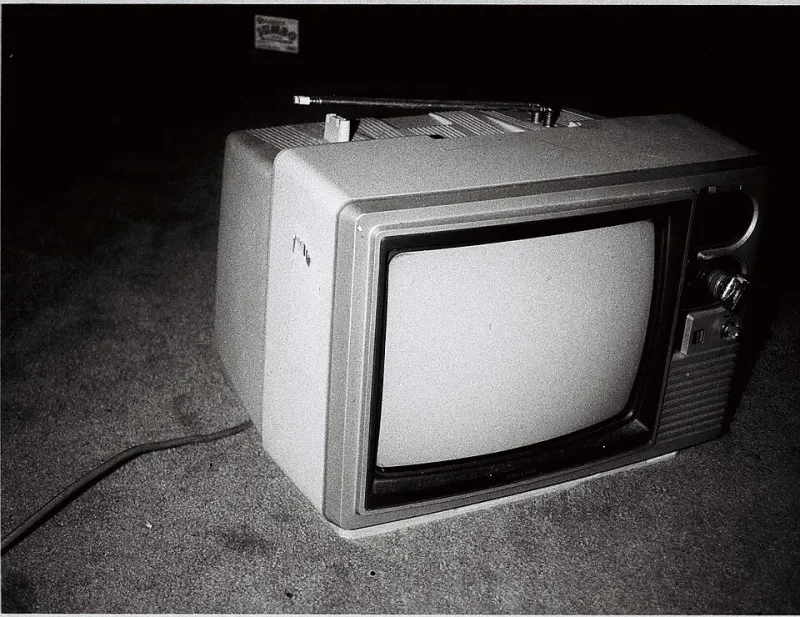
The Glorious Wasted Hour: In Praise of Beautifully Useless British Telly

Photo by Photo by Friedrich Victoria on Unsplash on Unsplash
There is a kind of British television that exists for no good reason. A man in a regional studio demonstrating a machine that sorts walnuts. A late-night discussion about canal boats that drifts into a row about tea. A test card with a soundtrack that sounds like a lift in purgatory. These programmes do not build a brand. They do not travel well. They are not, in the language of 2026 commissioning, content. They are television, and we should be worried about how little room is left for them.
The Joy of the Unoptimised Programme
An unoptimised programme is one that has not been designed backwards from a metric. It does not have a hook, a format, a second-screen experience or a plan for the social media cut-downs. It has a presenter, a studio and a slightly odd idea. Sometimes it fails. That is the point. Failure is part of the ecology. A culture that cannot tolerate a wasted hour will eventually forget how to make a surprising one.
The old closedown sequences, the Open University lectures, the regional ITV oddities that filled the gaps between the adverts: none of these were masterpieces. But they were part of a broadcasting landscape that allowed for the low-stakes, the experimental and the plain strange. They gave viewers permission to stumble across something they did not know they wanted. That is a public good, even when it is also a man in a cardigan talking about drainage.
When Every Minute Has to Justify Itself
In 2026, the language of television is the language of justification. Content. Engagement. Deliverables. Audience funnel. A programme is asked to prove its worth before it has been made. That pressure produces polished things, but it also produces a kind of cultural tidying-up. The weird corners get swept away because they cannot be measured easily. The late-night experiment becomes a podcast. The regional studio gets folded into a hub. The show that nobody can describe in a sentence does not get commissioned.
This is not just a loss for comedy, though it is a loss for comedy. It is a loss for broadcasting as a place where the country talks to itself in odd ways. A schedule made entirely of optimised programmes is like a town made entirely of chain shops. It works. It is efficient. It is also very boring.
Past and Present Curious Corners
The past is full of them. The BBC test card, the long gaps in the schedule, the local news magazine that would suddenly cut to a man with an owl. The 1990s gave us late-night studio experiments and shows that felt like they had been assembled by people who were allowed to be silly. The 2000s gave us comedy that looked cheap and sounded strange. None of it was precious. All of it added texture.
The present still has flickers. Slow television on BBC Four. Random Acts on Channel 4. Late-night slots on regional channels that feel like they were programmed by a human rather than a spreadsheet. Community radio and local television, where the stakes are low and the voices are specific. These are the curious corners of 2026. They are not glamorous. They are worth protecting.
The Case for a Wasted Hour
Imagine a schedule with a deliberate wasted hour. Not a graveyard slot, but a protected one: a space for experiments, failed pilots, regional oddities and studio ideas that have not been workshopped into oblivion. Give it a small budget and a simple rule: it does not have to be good, but it has to be curious. Some of it will be terrible. Some of it will be the most interesting thing on television that week. That is how culture works.
This is not a plea for lower standards. It is a plea for a wider range of standards. A programme can be badly lit and still be worth watching. It can be slow and still be alive. It can be useless in the sense that it does not sell anything, teach anything or launch a franchise, and still be part of the common good. British television used to understand that. It should remember it again.
What We Lose If We Tidy Up
We lose the training ground where people learn to make things without a safety net. We lose the shared weirdness of stumbling on something at midnight and having no one to explain it to. We lose the sense that broadcasting is a public room rather than a shopfront. And we lose the possibility that the next great comedy, the next strange documentary, the next beloved failure begins as a wasted hour that nobody was optimising.
So here is to the walnut-sorting machine. Here is to the regional studio and the presenter who is not quite ready for prime time. Here is to the programme that cannot justify itself in a pitch meeting. British telly is at its best when it leaves a little space for the beautifully useless. We should fight for that space before it is quietly scheduled out of existence.